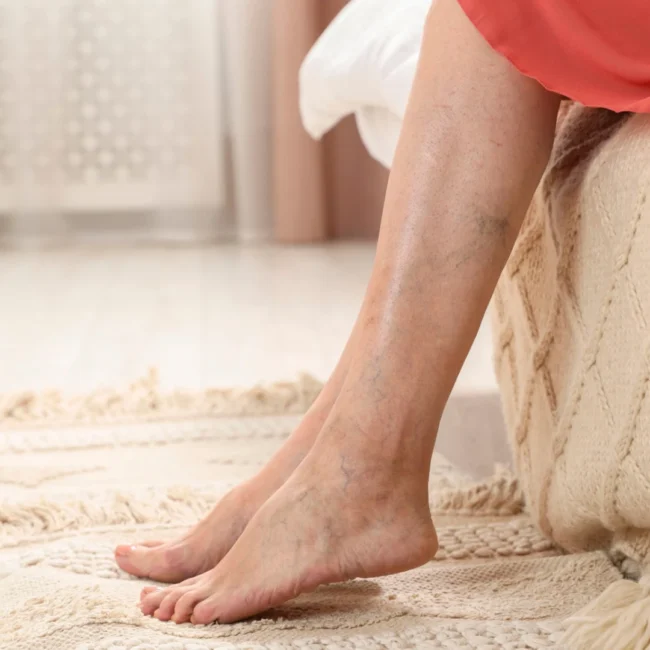
What Is a Bleeding Varicose Vein in the Leg?
A bleeding varicose vein in the leg represents an advanced case of venous disease wherein weakened, enlarged veins rupture and bleed through the skin. When the veins can no longer prevent unwanted backflow (blood moving away from the heart instead of towards it), the resulting pooling of blood in the affected veins causes an increase in pressure over time.
As this venous insufficiency worsens, the surrounding skin tends to thin out and become more fragile, opening the door to spontaneous bleeding.
When varicose vein bleeding occurs, blood seeps into surrounding tissues, often breaking the skin’s surface tension and rupturing tissues like a blister. While most cases of bleeding are painless, some cases involve heavy blood loss for which immediate attention is required.
In either case, leaving the issue unaddressed causes both a cosmetic concern and anxiety, as the affected person can’t predict when the following incident will occur or whether or not it will worsen.
What Causes Varicose Veins in the Legs to Bleed?
Healthy veins are equipped with valves that open for blood returning to the heart and close when the blood moves away from the heart. When these valves are damaged or weakened, backflow of blood occurs, allowing the blood to pool in the extremities. This issue is exacerbated when the legs are positioned directly under the heart (as when sitting or standing) for prolonged periods of time.
Another exacerbating factor is inactivity, as contraction of the leg muscles can help insufficient veins overcome gravity and return blood to the heart.
When a vein and the surrounding skin are in this state, even a slight scratch can lead to heavy blood loss.
Specifically, factors affecting the onset and progression of bleeding varicose veins include the following:
- Increased Venous Pressure. As more blood continues to pool in a small section of the vein, the mounting pressure can eventually cause a rupture.
- Skin Deterioration. Over a period of several months or years, continually applied pressure from the enlarged vein degrades the surrounding skin, thinning it out and increasing susceptibility to bleeding.
- Minor Trauma. Even slight impacts, abrasions, or gradually applied pressure can cause the weakened skin to bleed excessively.
- Progressive Vein Weakness. Left untreated, varicose veins will continue to weaken and enlarge, moving closer to the skin’s surface where they are both more vulnerable and aesthetically problematic.
Bleeding in the legs may be caused by venous insufficiency. This condition occurs when the veins are unable to pump blood back to the heart because of weakened or damaged valves.
The resulting build-up of pressure can eventually lead to the rupture of the affected veins. Varicose veins also tend to break down the walls of the skin over time, bringing the problem veins closer to the surface.
Sometimes, the slightest scratch or scrape can lead to excess blood loss. While the bleeding is generally painless, some patients may experience a significant loss of blood that threatens their overall health.