
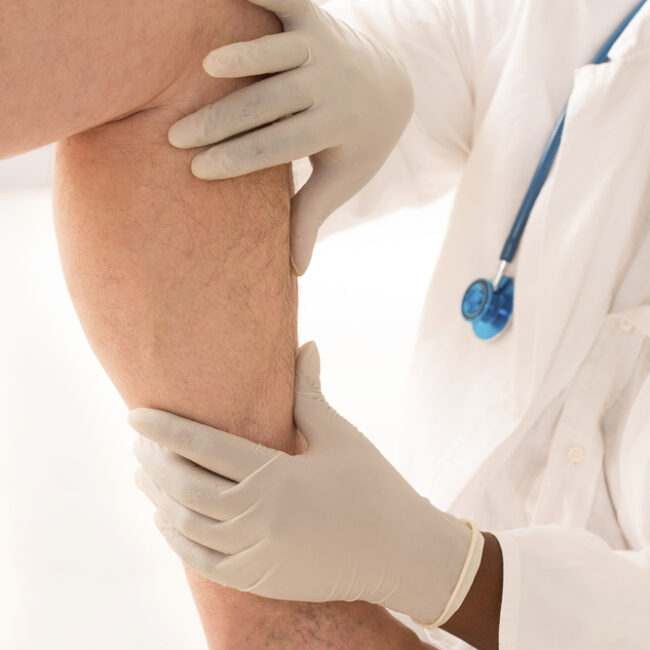
Venous ulcers represent one of the most serious complications of chronic venous insufficiency, with slow-healing wounds that can significantly impact quality of life. At the Vein Care Center, Dr. Manu B. Aggarwal and team provide comprehensive diagnosis and advanced treatment for patients suffering from venous ulcers throughout Lima, Celina,  and the greater Auglaize County area.
What Are Venous Ulcers?

Venous ulcers are open wounds that develop on the lower legs due to chronic venous insufficiency. They typically appear near the ankles inside the legs where venous pressure is the highest. However, unlike typical cuts that heal within days or weeks, venous ulcers are chronic wounds that can persist for months or even years without proper treatment.

These wounds develop when damaged venous valves allow blood to pool in the lower extremities, creating sustained high pressure within the leg veins. This increased pressure prevents oxygen and nutrients from reaching the surrounding tissues, leading to ulcer formation. The longer venous ulcers remain untreated, the greater the likelihood of permanent tissue damage, with damage potentially spreading to cause infections that can become life- or limb-threatening.

Venous ulcers are fundamentally different from other types of wounds because they result from an underlying circulatory problem rather than external trauma. Their chronic nature means they require specialized treatment that addresses both the ulcer itself and the venous insufficiency that caused it.

How Are Venous Ulcers Diagnosed?

We use a comprehensive diagnostic approach to evaluate venous ulcers and identify the underlying venous insufficiency. The diagnostic process begins with a thorough physical examination of your legs, during which Dr. Aggarwal and her team carefully assesses the ulcer’s location, size, depth and surrounding tissue condition.

Advanced ultrasound technology plays a crucial role in diagnosis, allowing the medical team  to visualize blood flow patterns and identify areas of venous valve dysfunction that contribute to ulcer development. This noninvasive imaging reveals the extent of venous insufficiency and helps create a detailed treatment plan.

An ankle-brachial index (ABI) may also be ordered  to determine if there is concurrent arterial insufficiency, as this affects treatment options, particularly regarding compression therapy. The team  will also evaluate your medical history, including any previous blood clots, injuries or underlying conditions that may contribute to poor wound healing.

What Causes Venous Ulcers?

Venous ulcers develop as a direct consequence of chronic venous insufficiency, making CVI the primary underlying cause that must be addressed for successful treatment. The cause of venous ulcers is high pressure in the veins of the lower leg, which occurs when venous valves become weak or veins become scarred and blocked, allowing blood to flow backward and pool in the legs.

Here are several factors that contribute to their development:

01 /
Chronic venous insufficiency

Damaged valves create continued high pressure in leg veins

02 /
Previous deep vein thrombosis

Blood clots can damage venous valves permanently, leading to post-thrombotic syndrome

03 /
Varicose veins

Enlarged, damaged veins that contribute to poor circulation and increased venous pressure

04 /
Advanced age

Natural aging processes weaken vein walls and valves over time

05 /
Prolonged immobility

Extended sitting or standing impair circulation and increase venous pressure

06 /
Obesity

Excess weight creates additional pressure on the venous system

07 /
Previous leg trauma or surgery

Injuries can damage veins and surrounding tissues

08 /
Family history of venous disease

Genetic predisposition affects vein structure and function

What Are the Symptoms of Venous Ulcers?

Chronic venous insufficiency and venous ulcers often cause pruritus with or without a rash, aching pain in the gaiter area, evening pedal edema and night cramps.

Early symptoms include persistent swelling in the legs and ankles that worsens throughout the day and leg heaviness or aching that intensifies after prolonged standing or sitting. Many patients notice skin changes around the ankle area, including brown or reddish discoloration, thickening or hardening of the skin and increased sensitivity or itching.

The skin may develop stasis dermatitis as the condition progresses, appearing red, scaly or inflamed. When blood pools in the veins of the lower leg, fluid leaks out into the skin and other tissues, causing itchy, thin skin and leading to stasis dermatitis, an early sign of venous insufficiency. Eventually, the compromised skin breaks down, forming an open wound that characteristically appears as a shallow, irregularly shaped ulcer with red or yellow tissue at the base.

Venous ulcers are often painful, with pain that may worsen when legs are dependent and improve with elevation. The surrounding skin frequently shows signs of chronic venous changes, including pigmentation, swelling and sometimes a hard, woody texture.

Treatment Options for Venous Ulcers

Successful treatment of venous ulcers requires a comprehensive approach that addresses both the wound healing process and the underlying chronic venous insufficiency. The Vein Care Center offers multiple treatment modalities tailored to each patient’s specific condition:

01 /
Compression therapy

Medical-grade compression stockings or wraps to reduce venous pressure and promote healing

02 /
Advanced wound care

Specialized dressings and cleaning techniques to promote an optimal healing environment

03 /
Debridement

Removal of dead or infected tissue to stimulate healthy tissue growth

04 /
Endovenous laser treatment (EVLT)

Minimally invasive procedure to treat underlying venous insufficiency

05 /
Sclerotherapy

Injectable treatment to eliminate problem veins contributing to venous pressure

06 /
Leg elevation and exercise programs

Conservative measures to improve circulation and reduce swelling

07 /
Medical management

Treatment of underlying conditions that may impair healing

Venous Ulcer Treatment at the Vein Care Center

At the Vein Care Center, we take a comprehensive approach to venous ulcer treatment, recognizing that successful healing requires addressing the underlying chronic venous insufficiency that caused the ulcer to develop. Her treatment philosophy emphasizes the importance of treating the root cause while providing optimal wound care to promote healing and prevent recurrence.

To help treat a venous ulcer, the high pressure in the leg veins needs to be relieved through compression stockings or bandages, leg elevation above the heart and regular walking to improve blood circulation. Dr. Aggarwal and her team of providers create personalized treatment plans that may combine conservative therapies with minimally invasive procedures to restore proper venous function.

The center’s advanced ultrasound technology allows for precise mapping of venous dysfunction, enabling targeted treatment of the specific veins contributing to ulcer development. Dr. Aggarwal and her experienced team provide ongoing monitoring throughout the healing process, adjusting treatment approaches to ensure optimal outcomes.

Patient education forms a crucial component of treatment, as understanding proper wound care, compression therapy compliance and lifestyle modifications significantly impacts healing success. The team provides comprehensive guidance on preventing recurrence, as venous ulcers can return even after successful treatment.

Prevent or Eradicate Venous Ulcers at Vein Care Center

Timely care from an experienced wound care provider significantly lowers the risk of serious complications. If you’re experiencing symptoms of venous insufficiency or have developed a venous ulcer, don’t delay seeking treatment. 

Contact the Vein Care Center today at (419) 227-4472 or visit or click below to schedule your comprehensive evaluation and begin your journey toward healing.

“Gwynne is the best! She knows her job and does a fantastic job! Reception area was great also.”

R. S.

“My nurse was outstanding and very helpful. Ultrasound tech was fabulous – considerate of my needs. No complaints.”

G. A.

“Very friendly, make you feel like they really care!”

R. G.

“Dr. Aggarwal and staff are great!”

J. C.

“Thank you for making this patient feel that I am a top priority for your help.”

L. C.

Happy Legs, Happy Life

Professional Skin and Beauty Care at Our Aesthetic Treatment Center

Aesthetic Care Center, our specialized aesthetic treatment facility led by Dr. Aggarwal, combines advanced anti-aging technologies with personalized treatment plans to address your unique skin concerns. Our comprehensive suite of medical-grade aesthetic services includes the latest innovations in skin rejuvenation and body contouring, such as Botox, RF microneedling and truSculpt, all delivered with the same expertise and attention to detail that defines our vein care practice. Begin your transformation with a complimentary skin care screening, where we’ll create a customized plan to help you achieve your aesthetic goals.

Visit Our Aesthetic Care Center

Schedule Your Consultation

The Vein Care Center makes it easy to get started. Book your consultation today and explore treatment options designed to restore your health and comfort.

Schedule Your Consultation